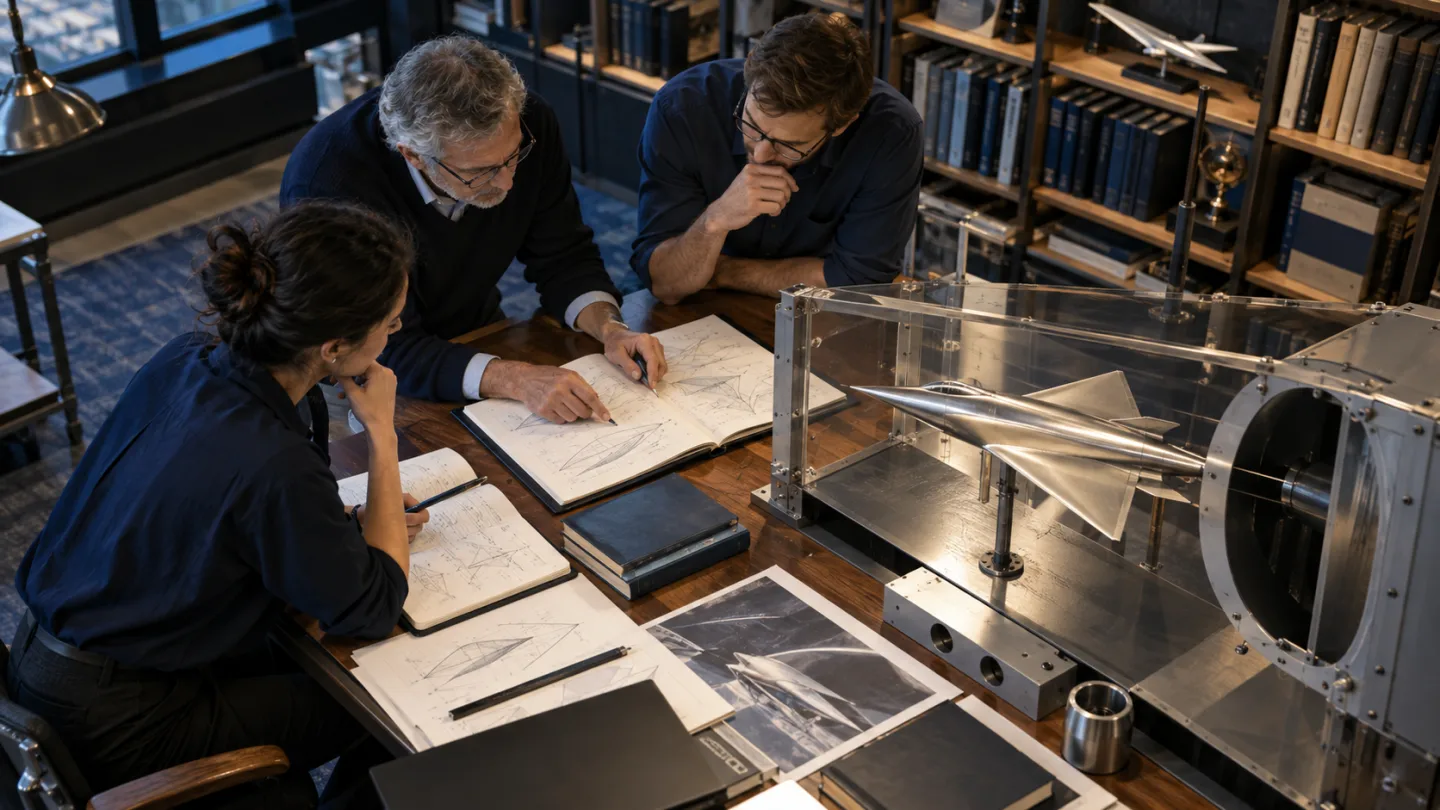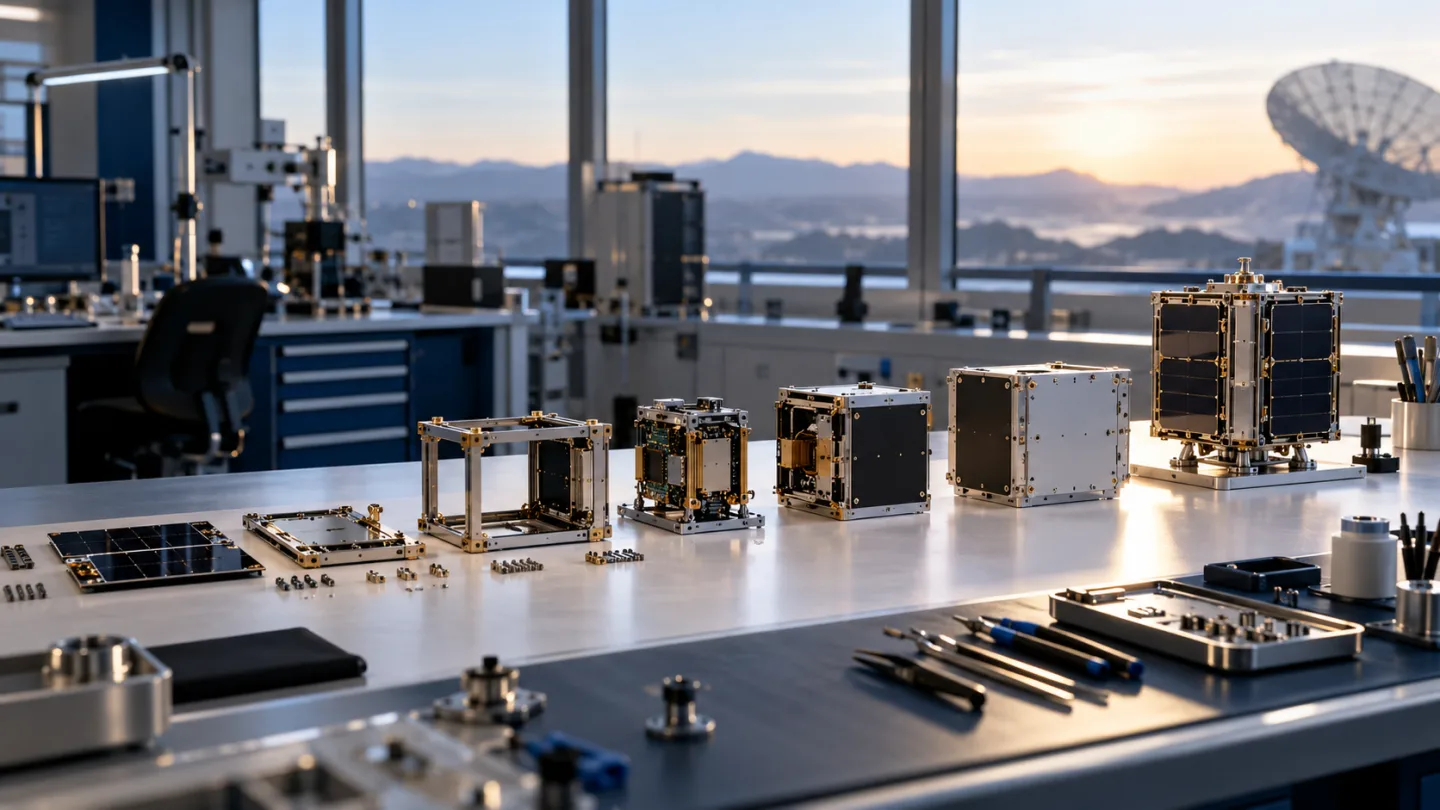

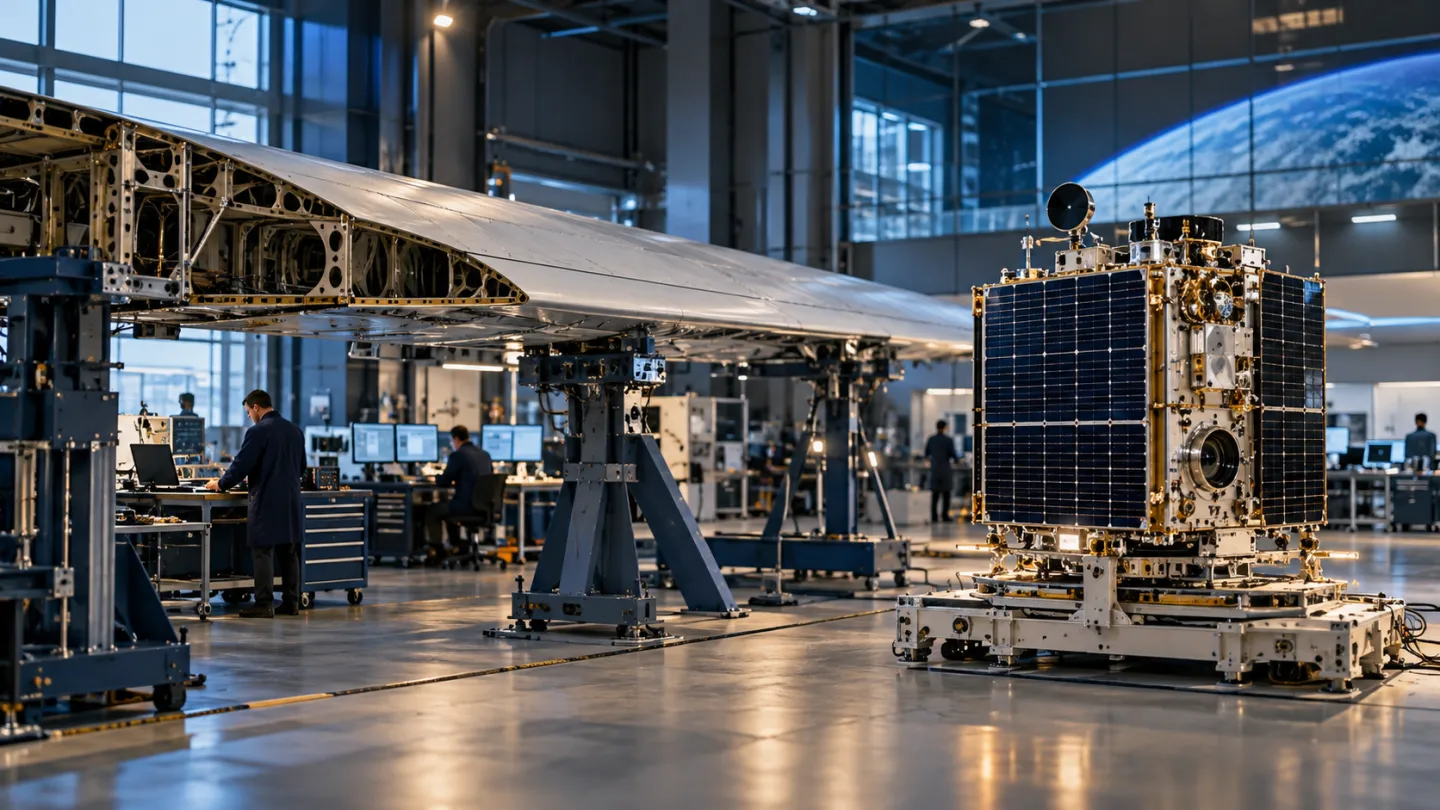
Aviation and space developed through different histories, authorities and engineering traditions. Digital infrastructure, navigation, advanced manufacturing and shared environmental questions are now creating connections that cannot be understood from either sector alone.
Current membership guidance: The membership architecture now distinguishes Corporate, Institutional and Individual routes. This dated article retains its original context; use the current membership pages for route and category guidance.
Two sectors, more connections
Aircraft and spacecraft still operate in very different physical environments. Their certification routes, operating conditions and risk models are not interchangeable. Yet the wider capabilities around them are converging. Aircraft rely on satellite navigation and communications. Space missions depend on aviation-linked logistics, ground infrastructure and advanced manufacturing. Uncrewed aircraft and advanced air mobility combine traditional flight disciplines with autonomy, digital connectivity and infrastructure questions that also arise in space systems.
Recognizing a connected ecosystem does not mean forcing every problem into a single framework. It means understanding where dependencies cross boundaries and where decisions made in one domain can create consequences in another.
The system-of-systems view
A system-of-systems is a larger capability created by multiple independent systems working together. Each system can retain its own purpose and management, while the combined capability depends on their interaction. A flight may involve an aircraft, satellite navigation, weather information, air traffic infrastructure, airport systems, communications networks and ground handling. A failure or change in one part can affect the performance of the whole.
This way of thinking encourages engineers and institutions to examine interfaces rather than only components. Interfaces include technical connections, data exchange, operational handovers and governance boundaries. They are often where uncertainty accumulates because responsibility is divided.
The important question is not whether aviation and space have become identical. It is whether their shared dependencies are being examined by the right combination of people.
Navigation, data and digital infrastructure
Navigation provides a clear example. An aircraft may combine satellite-based positioning with inertial systems, terrestrial infrastructure, onboard software and air traffic procedures. The resulting capability is not supplied by one organization. Resilience therefore depends on technical design, signal availability, cybersecurity, operational procedures and a shared understanding of degraded conditions.
Digital engineering creates another bridge. Aircraft, spacecraft and ground systems increasingly rely on software-intensive architectures, simulation, model-based engineering and lifecycle data. A digital twin is a digital representation linked to a physical system or process. Its usefulness depends less on the label than on the quality, traceability and intended use of the information it contains. A manufacturing twin, a maintenance model and an operational simulation may all require different evidence.
Cloud-connected engineering environments can improve collaboration, but they also raise questions about configuration control, access, intellectual property and cybersecurity. Those questions concern manufacturers, suppliers, operators, researchers and public institutions in different ways.
Manufacturing and lifecycle thinking
Composite materials, additive manufacturing, high-reliability electronics and advanced propulsion are relevant across aviation and space. Shared methods do not remove application-specific demands. A component used on a commercial aircraft and one used on a launch system may face different loads, inspection opportunities and consequences of failure. Cross-sector learning is useful only when those differences remain visible.
Lifecycle thinking connects design choices to manufacture, operation, maintenance and end-of-life management. Sustainability discussions become more credible when they consider energy source, material origin, manufacturing impact, operational efficiency, service life and recovery together. Focusing on a single phase can simply move an impact elsewhere.
One cybersecurity question, many participants
Consider a connected aerospace service that combines onboard equipment, a software supplier, satellite communications, ground infrastructure and operator procedures. A cybersecurity weakness may originate in one layer and become operationally significant in another. The manufacturer understands design controls; the operator understands real use; the service provider understands network conditions; the public authority understands applicable obligations. Effective analysis needs all of these perspectives without confusing their responsibilities.
The same is true for artificial intelligence. A model can be technically accurate in a laboratory and still be unsuitable for an operational decision if its data, uncertainty, human oversight or failure behaviour are poorly understood. Assurance therefore extends beyond model performance to the system and context in which the model is used.
Why cross-sector participation matters
Connected problems create a need for disciplined cross-sector Technical Work and Research. The first step is to map the systems, institutions and existing requirements around a question. Only then is it possible to identify a genuine gap and decide whether research, consultation, guidance or another output would help.
Aerospace Federation intends to provide a neutral environment for this type of work as participation and institutional capability develop. Its membership architecture includes institutional and individual routes because organizations and professionals contribute different kinds of knowledge. The value is not the removal of boundaries, but the ability to work across them without losing accountability.
When aviation and space share infrastructure, data and technical methods, cross-sector understanding becomes part of responsible engineering. A connected ecosystem deserves connected thinking.
Interfaces are where systems meet
A connected ecosystem is often easiest to understand through its interfaces. A technical interface defines how components exchange energy, data or mechanical loads. An operational interface defines how responsibility passes between teams or systems. An institutional interface appears where the mandate of one organization ends and another begins.
Failures at these boundaries do not always result from weak individual systems. Two systems may each meet their own requirements while relying on incompatible assumptions. A data service may publish a technically valid output that an operator interprets differently. A ground system may expect an update frequency that a satellite service was never designed to provide. Interface evidence must therefore include the assumptions on both sides.
Resilience across independent systems
Resilience is the ability to continue an acceptable level of service, adapt or recover when conditions change. In a system-of-systems, resilience cannot be assigned to one component alone. It depends on detection, alternative sources, degraded modes, operational procedures and communication between responsible organizations.
Satellite navigation interference offers a practical example. An aircraft may carry independent sensors and procedures, but the operational effect also depends on airspace infrastructure, traffic density, crew information and the duration and location of disruption. Engineering, operations and public authority perspectives are all needed to understand the actual risk.
The same principle applies to space-based communications supporting remote aviation. Service availability, antenna integration, network cybersecurity and operational dispatch decisions form one capability even though they are managed separately. Cross-sector analysis should document these dependencies without pretending that one organization controls them all.
Verification, validation and shared models
Verification asks whether a system or component meets its specified requirements. Validation asks whether it is suitable for the intended use. In connected systems, both depend on the accuracy of interface assumptions. A simulation may verify message timing against a specification while validation reveals that the timing is inadequate in a real operational sequence.
Shared digital models can improve understanding if their purpose and authority are explicit. A model used for early trade studies may not be suitable for safety evidence. A research dataset may support exploration but lack the configuration control required for an operational decision. Teams need to know which artefact is informative, which is controlled and which remains provisional.
Questions that deserve cross-sector work
- How should assurance evidence move between independent software and system suppliers?
- Which degraded navigation or communications scenarios cross aviation and space responsibilities?
- How can lifecycle data remain traceable when tools and ownership change?
- Where do sustainability assessments move impacts between manufacture, operation and end of life?
- Which skills and terminology are shared, and where do sector-specific meanings create risk?
These are not automatically topics for a new AF document. They are candidates for landscape review, research or structured dialogue. The correct response depends on existing work, user need and the competence available to examine the question.
Building a common view without forcing uniformity
Cross-sector cooperation succeeds when it creates enough shared understanding for participants to coordinate while preserving legitimate differences. Aviation and space should not be merged into one vocabulary where their risk, environment or legal context differs. Instead, the shared view should identify where terms align, where they do not and why.
Membership can help AF assemble this view progressively. Institutions bring organizational experience and system context; individual professionals bring specialist knowledge and lessons that may cross organizational boundaries. Together, and within a governed process, they can help the Federation decide which connected questions are ready for useful work.